

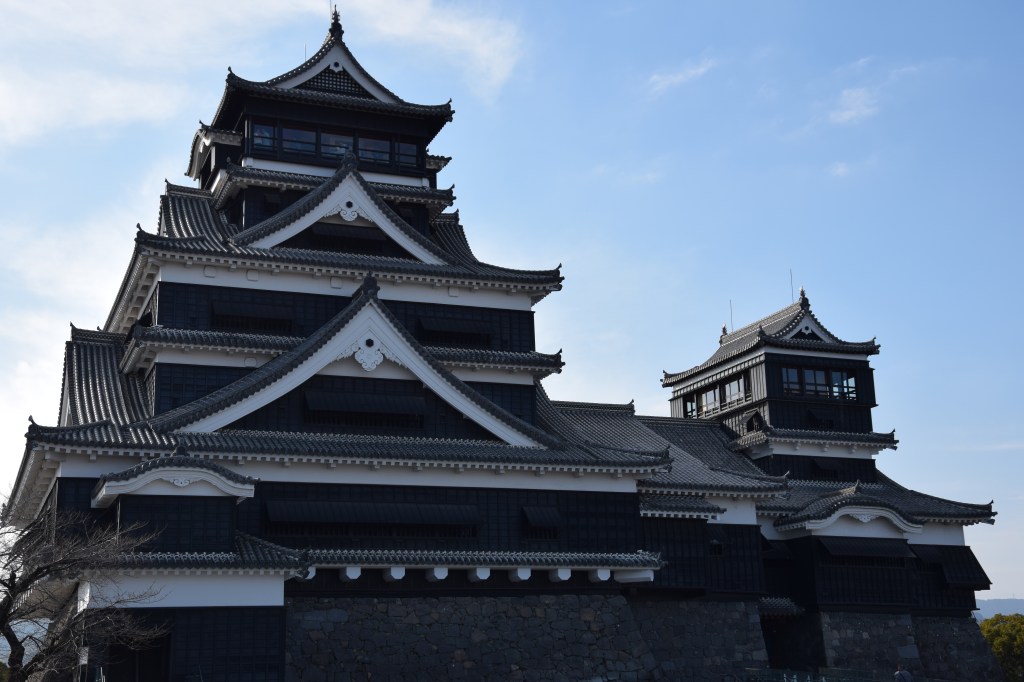
As many of my readers already know, Okinawa is a truly unique place. The bond among Okinawans remains remarkably strong, even when they live far from their home island. I have come to understand this through personal experience—my wife is from Okinawa, and over the years she has introduced me to many of the island’s customs and traditions.
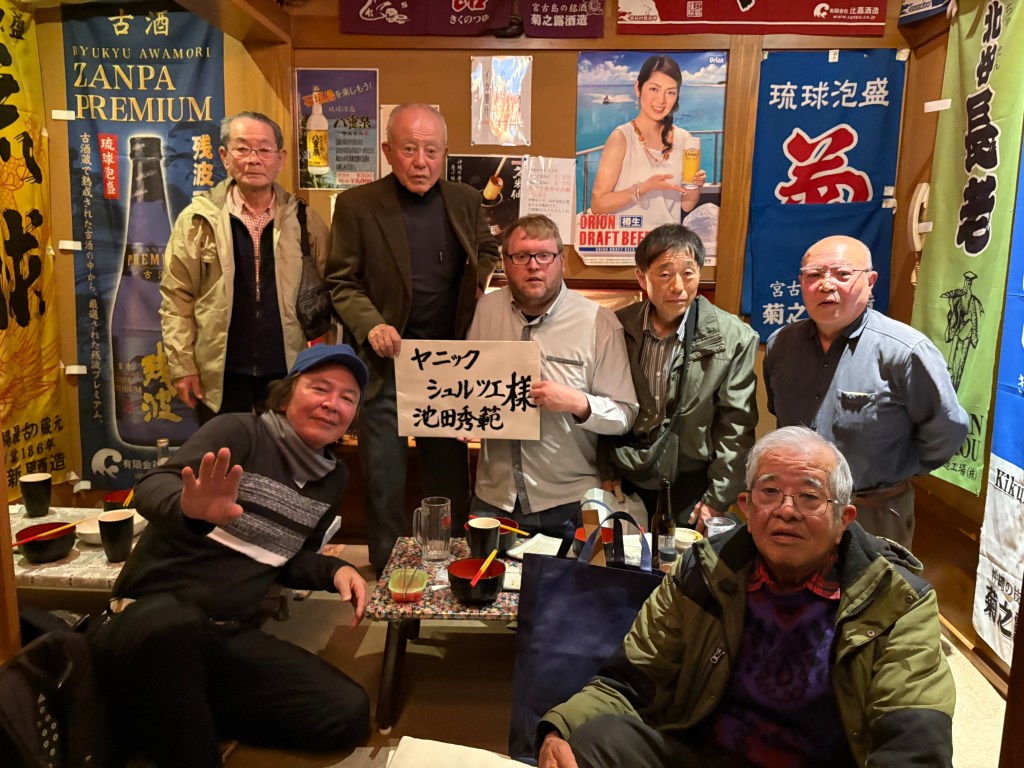
It is for this reason that Okinawans often seek connection through so-called Kenjinkai. In many Japanese cities and even overseas, these communities bring together people with ties to Okinawa, offering a warm and welcoming space to maintain relationships and preserve cultural traditions through regular gatherings. Ikeda sensei and I had the pleasure of being invited to such a meeting in Kumamoto. Among the participants was none other than the grandson of Kyoda Jūhatsu, the son of Kyoda Jūkō. We had previously been in contact with him by e-mail through a third party, and he had kindly expressed how much he was looking forward to meeting us in person.
Over the years, the bridge between Tō’on-ryū and the Kyoda family had gradually weakened following the passing of Jūkō sensei in 1983. As Kyoda’s grandson no longer lived in Beppu, and after the deaths of Kanzaki sensei and others, it seemed as though that connection might have been lost. Fortunately, life sometimes unfolds in unexpected and meaningful ways. My wife was contacted via Facebook by a member of the Kyoda family in Okinawa, and through this renewed contact it became possible to rebuild the bridge completely. Today, Tō’on-ryū once again shares strong and heartfelt bonds with the family of Kyoda Jūhatsu.
On this special occasion, I brought along two issues of Gekkan Hiden for each participant, featuring the article on Kyoda Jūhatsu, as well as some chocolate from Germany as a small token of appreciation. To my great surprise, Kyoda’s grandson had already purchased the two issues and told me that he was a great admirer of my writings and that my articles had paid a significant tribute to his grandfather. The meeting soon turned into hours of engaging and lively conversation about Kyoda Jūhatsu. Through his grandson’s generous sharing of memories, we gained invaluable insights—personal stories and family recollections that had never before been made public and were entirely new to us.
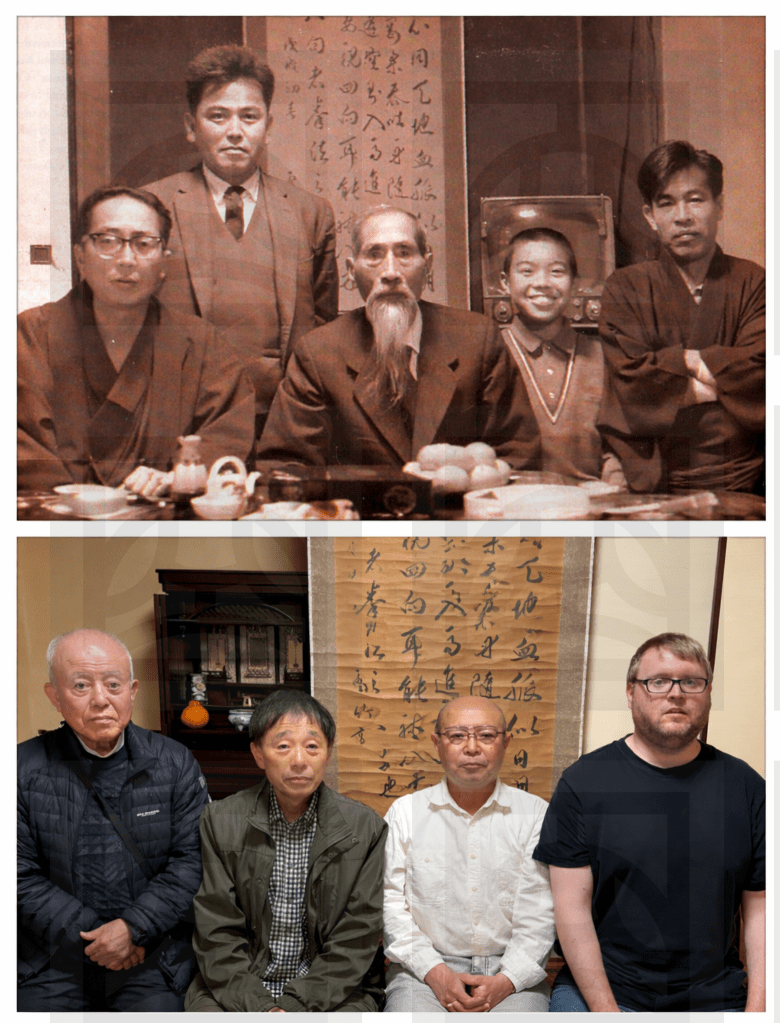
To our great surprise, the grandson invited us to his home the following day, explaining that he had already prepared something for us. When we arrived, he showed us photo albums of Kyoda Jūhatsu containing many pictures we had never seen before, as well as Kyoda sensei’s sai, his bō, and other personal belongings. To our astonishment, even the calligraphy by Iraha Chōkō—presented to Kyoda during one of his visits—was still hanging intact in the grandson’s home. He additionally treated us to green tea, banpeiyu, and Japanese sweets. After five hours, including a two-hour interview, it was time to take our leave.
Ikeda sensei had also kindly arranged an additional training opportunity, allowing us to practise together for two more days. We dedicated considerable time to the bōjutsu kata preserved within Tō’on-ryū. Beyond the training itself, we also visited several places connected to the tradition. We were able to see the former school of Jūkō sensei in Kumamoto, as well as the former barracks of Yabu Kentsū sensei, who is associated with Tō’on-ryū through the kata “Yabu no Jion.”
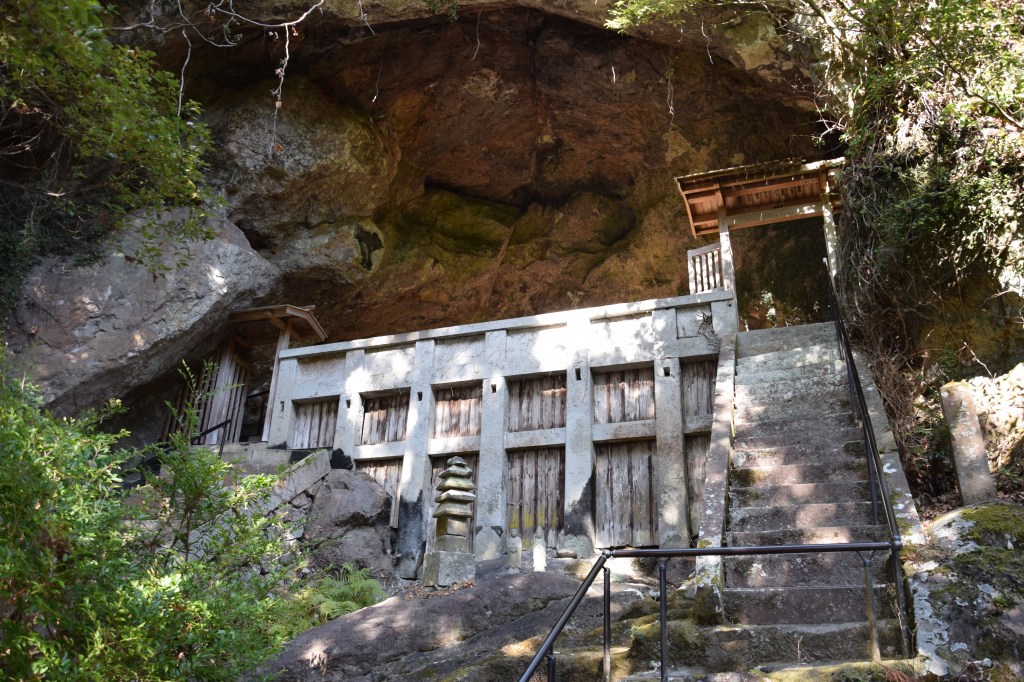
Our time in Kumamoto also included a visit to the Miyamoto Musashi Shrine, where Miyamoto composed his renowned treatise Gorin no Shō, better known in the West as The Book of Five Rings.
After the earlier stages of the journey, our stay in Kumamoto felt far too short. From there, it was time to return to Germany—to my family, to my private dōjō, and to my desk—where two long-awaited books were steadily approaching completion.
 Karate Kenkyū Shitsu