Bridge No. 2 – The Grandson of Miyagi Chōjun

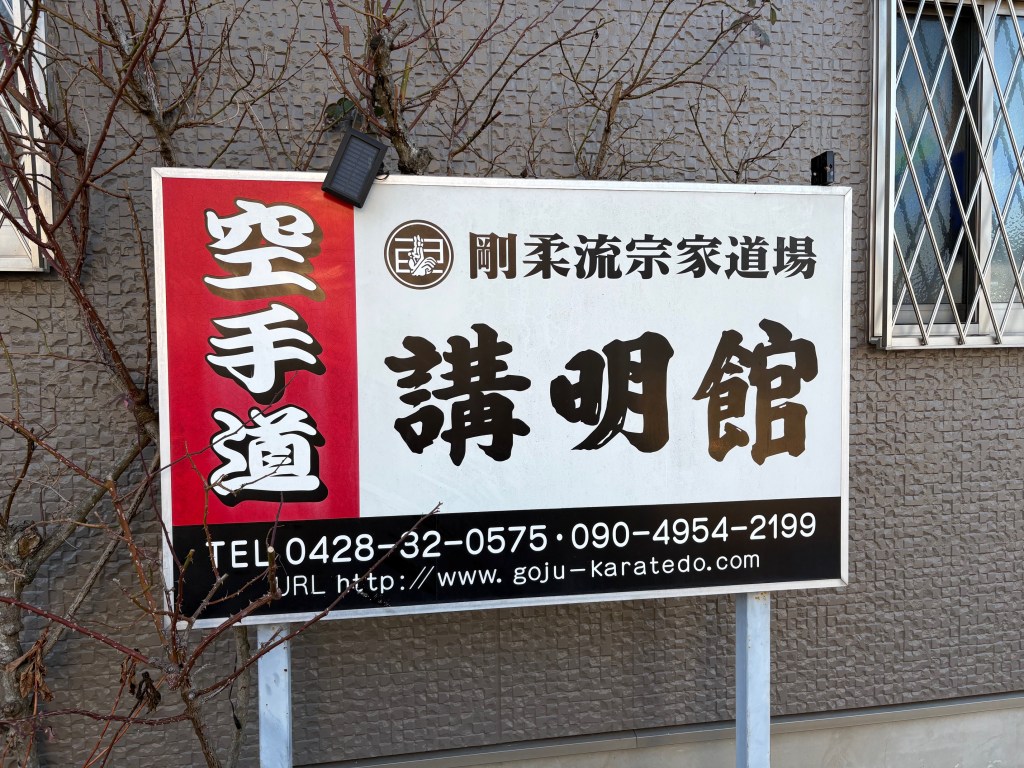
For a long time, I had wished to visit the Kōmeikan dōjō of Miyagi Tōru sensei. It is located in the greater Tōkyō area and was originally founded by his father, Miyagi Takashi, the eldest son of Miyagi Chōjun. Miyagi Takashi had gone to mainland Japan before the war and settled there, where he later established the dōjō. Miyagi Tōru learned karate from his father, who in turn had been taught directly by Miyagi Chōjun. Karate is therefore deeply rooted within the family, and Miyagi Tōru’s sons are also continuing this tradition through their own practice.

At this point, I would like to express my sincere gratitude to Hans Tanaka, who kindly established direct contact for me and generously supported me throughout my visit.

My primary objective was to examine the connection to Tō’on-ryū more closely. In this context, I had heard that Miyagi Takashi had once traveled to Beppu in order to receive instruction in the kata Sanseirū. Although he had already learned this kata from his father before the war, oral tradition maintains that Takashi also went to Beppu specifically for further training. Miyagi Tōru sensei provided me with some insights into this story, which I will reveal in a later English translation of my Gekkan Hiden articles.

Already in the previous year, I had the opportunity to ask Koyama Masashi sensei about the Sanseirū of Iraha Chōkō. Koyama Masashi learned this version during his visit to Okinawa in 1977, and it differs slightly from the kata preserved in Beppu today. It was therefore all the more gratifying to be able to observe the version practiced at the Kōmeikan dōjō as well.
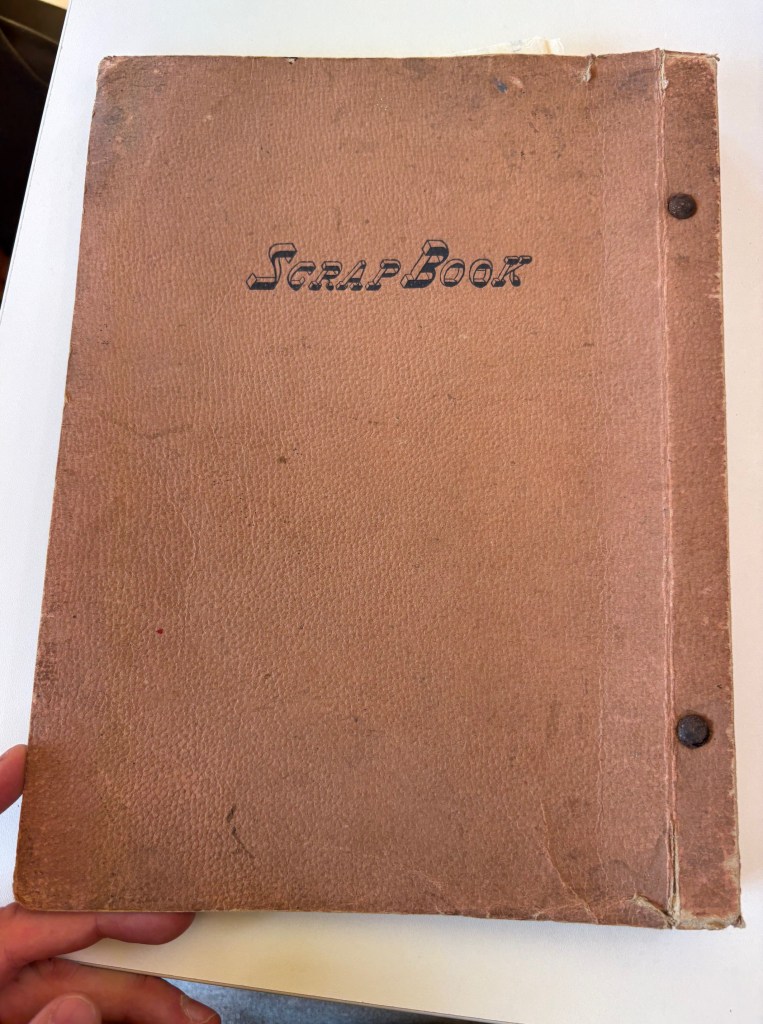
As I had previously written about Miyagi Tōru’s grandfather and his journey to Hawaii in 1934, it was a great pleasure to speak with Miyagi Tōru about his grandfather’s journey to Hawaii. Miyagi Chōjun was an early karate pioneer who sought to build bridges not only on mainland Japan, but also on the island of Hawaii. A great surprise came when Miyagi Tōru opened several small treasures for me and allowed me to examine them more closely—among them were books containing previously unseen newspaper articles from Hawaii, as well as much other interesting material.
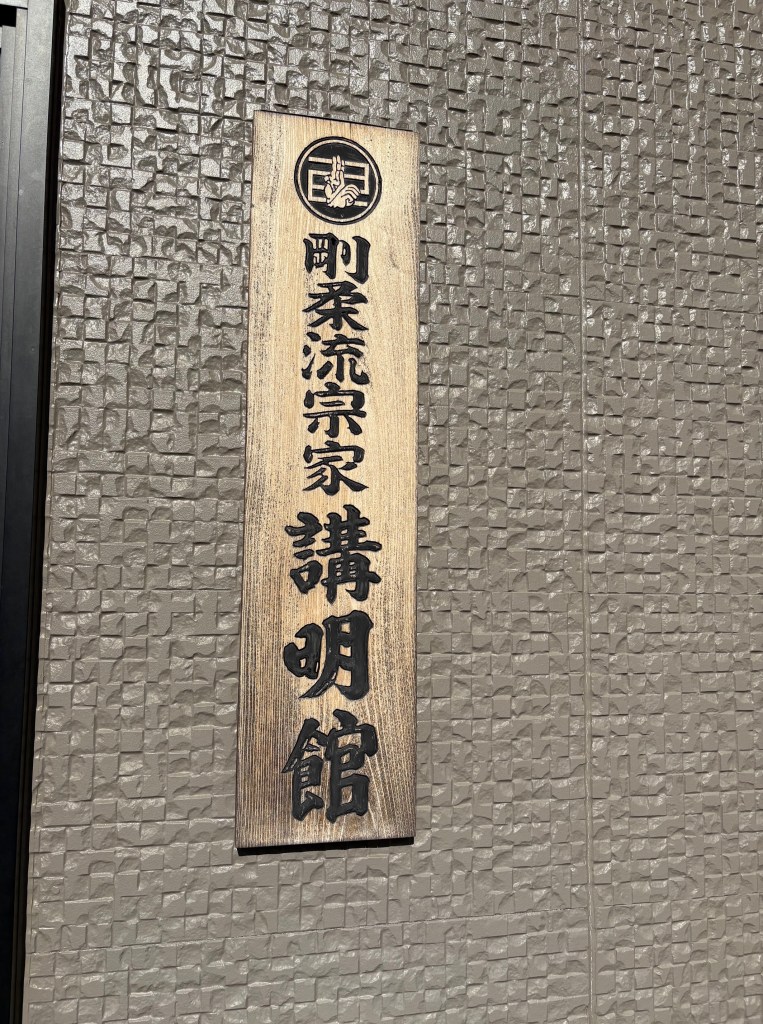
After the training session, during the time spent talking afterward, Miyagi Tōru sensei surprised me by taking me to the Miyagi family tomb in Tōkyō.

In that moment, it felt as though a bridge had been built—formed both by my written words and by the train journey from my hotel to the dōjō of Miyagi Tōru sensei. I sincerely hope to have the opportunity to visit him again in the future.

It was both an honor and a great pleasure to meet the Miyagi family in person, including Miyagi Tōru’s second son, Miyagi Manobu sensei, as well as the many kind and very welcoming students of the Kōmeikan dōjō. I am deeply thankful for the opportunity to take part in a three-hour training session, as well as for the extensive time spent together afterward; altogether, I was away from my hotel for more than twelve hours.
Bridge No. 1 – The Underground Connection at Frankfurt Airport and My Flight to Japan

My journey to Japan begins today, and I want to invite you to join me, even if only a little, along the way. At Christmas, I shared a picture on my Facebook page, accompanied by the words:

“It is more important to build bridges than to destroy them.”

This thought will accompany me on my journey. I plan to describe my trip while reflecting on bridges – both real and metaphorical. To be precise, I have decided to divide this journey into seven chapters: Seven Bridges. Ironically, before I was born, there was already a song called “Über sieben Brücken musst du geh’n” (“You must go over seven bridges”), which was later even performed in English by Chris de Burgh.

The song carries a somewhat melancholic tone. My journey, however, is meant to be joyful and enlightening. But as the saying goes: every journey begins with the first step. For me, this first step leads from my front door to Hamburg Airport – the Hamburg Airport Helmut Schmidt – and from there to Frankfurt, Germany’s major international hub.

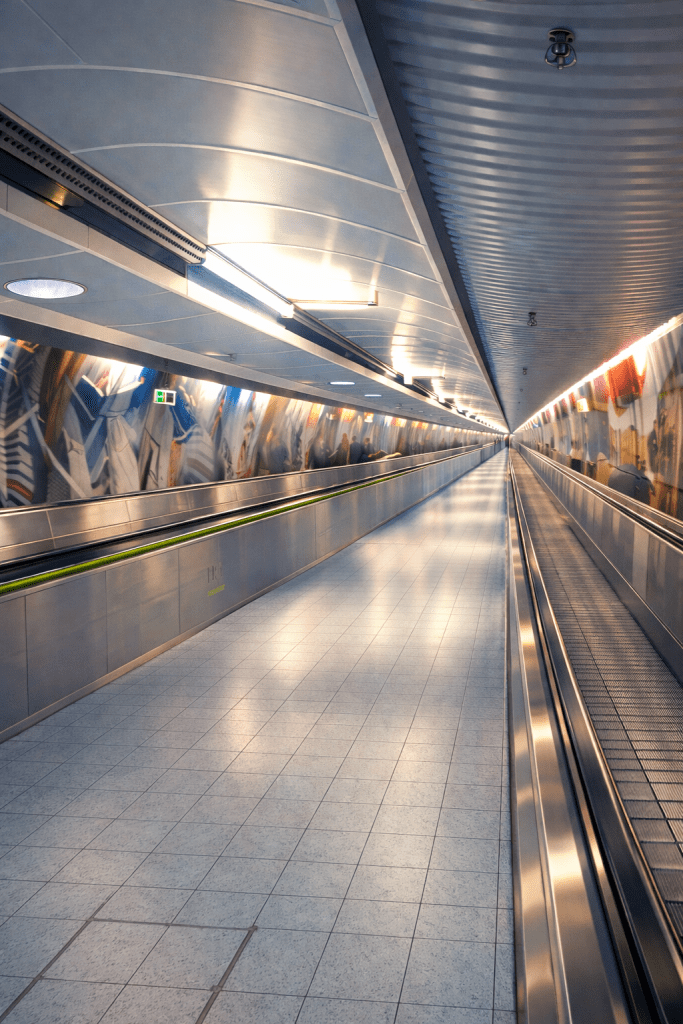
And here begins the first bridge – or more precisely, a tunnel that functions much like a bridge. It connects places that would otherwise be difficult to reach. In Frankfurt, it links the domestic and international sections of Terminal 1, passing directly beneath the passenger boarding bridges and the aircraft parking positions. In this way, it forms a connection that ties passengers, terminals, and operations together – a kind of “underground bridge” right in the heart of the bustling airport. From here, my journey continues without interruption, directly to Tōkyō – my first, temporary stop in Japan.

Not long ago, reaching Japan from Europe was only possible with great effort – either via the long route of the Trans-Siberian Railway or by ship. In between, there were the first flights with multiple stopovers, which felt more like an expedition than a single flight. These early routes connected continents, but required patience, time, and a sense of adventure. It wasn’t until the 1980s that nonstop flights made a direct connection possible, greatly simplifying travel. In 2008, I had the chance to travel to Japan – specifically Okinawa – for the first time. Back then, my route still went from Frankfurt to Taipei and then onward to Okinawa.

Travel has become much more comfortable since then, and I hope to get some sleep on the plane… because many more bridges in Japan await me. Of course, many karate-related experiences and other fascinating things are waiting for me this time, and I will describe them in detail in the coming days.

Until then… wish me a good rest over the clouds.

Karate History Between the Pages

I also consider myself a book collector — a passion that probably began around 2006, shortly after I started my martial arts journey. From the very beginning, I purchased many books by well-known masters, as well as a small number of Japanese books. At that time, I mainly focused on my own style, which was Shōtōkan — the same style practiced by many German karateka.

However, once I began studying Matayoshi Kobudō, I also started collecting a wide range of books on Okinawan and Ryūkyū Kobudō. I was quite fortunate during that period, as Henning Wittwer and Andreas Quast published their first book, and Mario McKenna was just about to complete his translation of Karate-dō Taikan by Nakasone Genwa. I purchased a copy from him immediately and was also able to obtain a signed copy at that time.

As I delved deeper into historical research, my focus gradually shifted more toward historical studies rather than purely technical ones. Of course, I still enjoy reading technical manuals, but training should primarily take place in the dōjō — not in front of a book or a screen. Over the years, I have therefore acquired more and more historical material, and I am still collecting today. More precisely, I am constantly searching for specific Japanese books that are still missing from my collection.

I have great respect for book collectors, and I am in frequent contact with several of them. We compare collections, exchange feedback, and sometimes I even share my opinion on what constitutes a fair price.

While I truly enjoy collecting books, I equally enjoy reading them — or, more accurately, working with them as sources. For this reason, I regularly search for very rare books, and fortunately, I am often able to locate them. From time to time, a sought-after book turns out to be sitting on the bookshelf of a fellow karateka who shares the same passion for karate literature.

Keep collecting — and let us share our experiences together.

The Legacy of Go Kenki

One third of our Tō’on-ryū series has already been published and has, gratifyingly, generated a great deal of positive feedback. It is therefore time to take a quick look at the following article. This contribution focuses on the Chinese martial artist from Fuzhou who is known in Japan primarily under the name “Go Kenki”.

The article is based not only on written sources but once again also on on-site interviews.

Two interviews conducted in 2024