

Yokoyama Masahiko has succeeded in writing a three-part article series on Tō’on-ryū. I was already familiar with Yokoyama sensei by name, though I have never met him in person. However, I have read the book he co-authored with Mabuni Ken’ei sensei, which has been translated into both German and English.
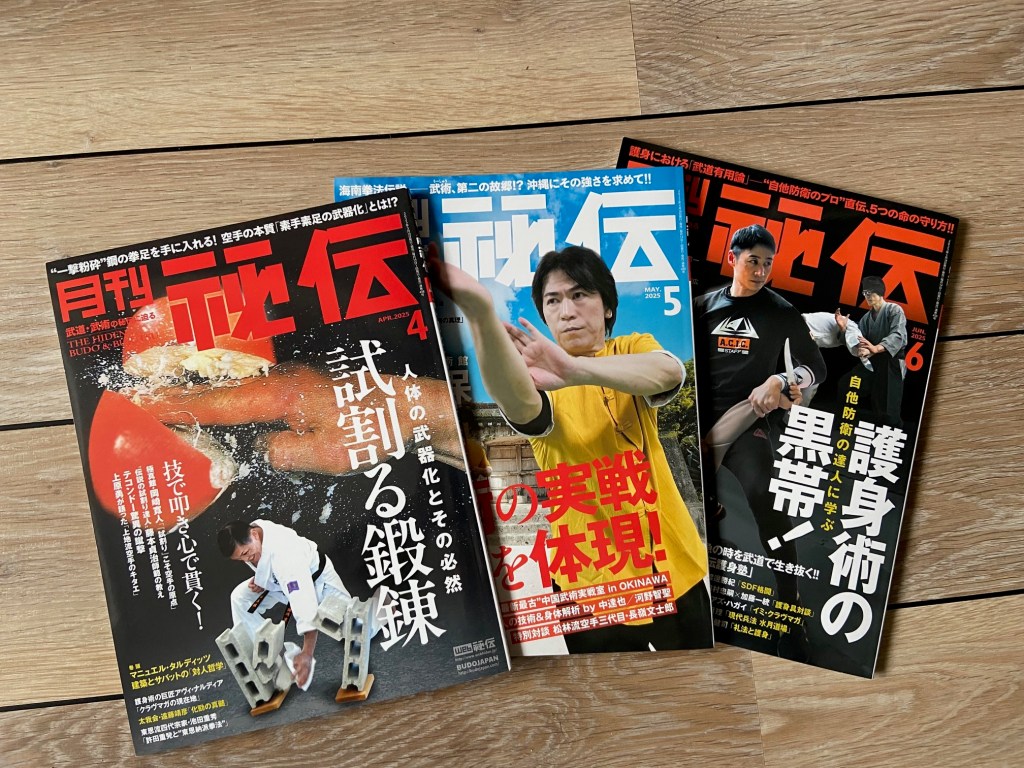
It is worth mentioning that this current article series, appearing 22 years after the last one, is only the second (in a mainland japanese magazine) to address the relatively rarely discussed Tō’on-ryū. The previous series was published in 2003 and was primarily based on the recollections of Kanzaki Shigekazu sensei, the 3rd Sōke of Tō’on-ryū.
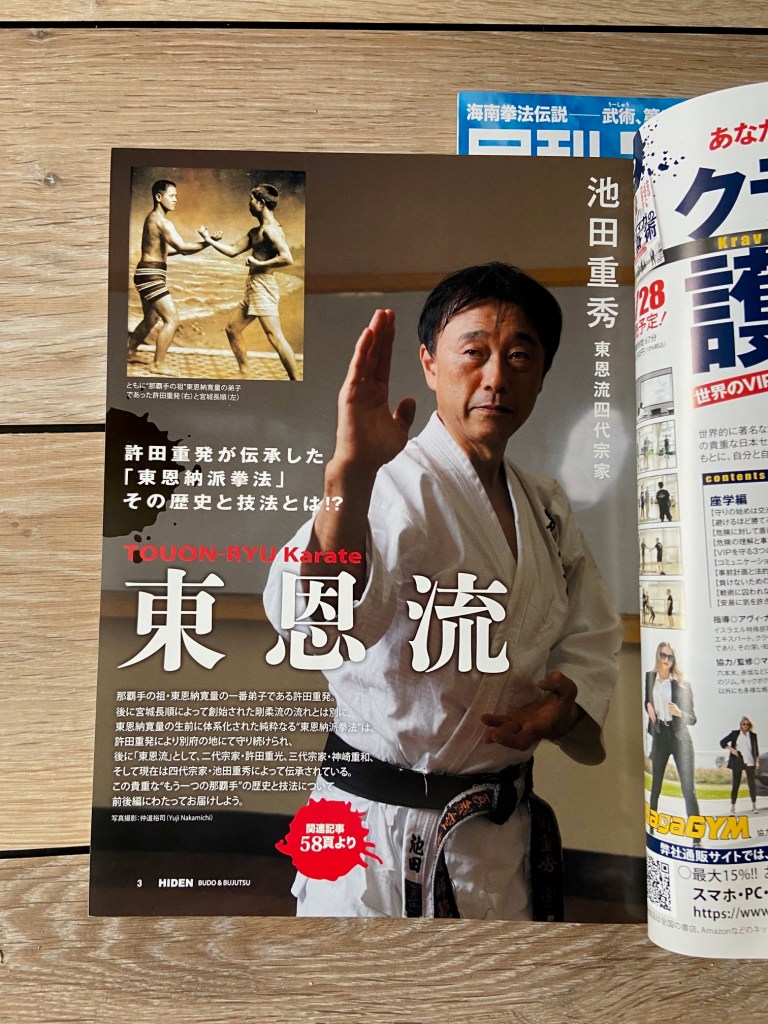
The current series is also the first to be published during the tenure of Ikeda Shigehide sensei, the 4th Sōke of Tō’on-ryū. While Ikeda sensei appeared in the 2003 series as a training partner of Kanzaki sensei, many of the insights in the present series are drawn from his own memories. His background as a Shitō-ryū student under Nishida Minoru sensei is also being addressed for the first time.
It should be noted upfront that Yokoyama sensei cites only a few sources in his work. Nonetheless, many of them can be easily traced. It’s also important to mention that Yokoyama sensei does not practice Tō’on-ryū himself, but comes from the Shitō-ryū tradition – a fact that is clearly reflected in his writing.
Now to the actual article series: as the title suggests, the series explores the history and techniques of Tō’on-ryū.
Issue 4/2025 begins with an overview of the style’s history. The first article is divided into the following sections:
- The Founder of Naha-te: Higaonna Kanryō
- Higaonna Kanryō’s Top Student: Kyoda Jūhatsu
- Tō’on-ryū and the Elusive Tō’on Gōjū-ryū
- Third Sōke of Tō’on-ryū: Kanzaki Shigekazu
- Fourth Sōke of Tō’on-ryū: Ikeda Shigehide
Issues 5/2025 and 6/2025 cover the 13 kata of Tō’on-ryū, divided as follows:
5/2025:
- Sanchin
- Pecchūrin
- Sansēru
6/2025:
- Bō-Kata, Sai Kata (1), Sai Kata (2)
- Kihon (1), Kihon (2), Kihon (3)
- Shiho Uke
- Higaonna Kan’yū no Seisan
- Yabu no Jion
- Nēpai
As mentioned, Yokoyama sensei comes from the Shitō-ryū tradition. Accordingly, his analysis of the kata Sanchin, Pecchūrin, Sansēru, and Nēpai is especially detailed, as these forms also appear in Shitō-ryū under nearly identical names. While I don’t agree with all of his interpretations, in several instances I’ve come to the same conclusions.
It should come as no surprise – I’ve mentioned it several times before – that I am also working on an article about Tō’on-ryū. My article is not intended to compete with the series, but rather to complement it and help introduce this lesser-known karate style to readers. I see my contribution as an addition – and in some aspects even an expansion – as I will address many details that Yokoyama sensei touches on only briefly.
Before my own article on Tō’on-ryū is completed, an interview between Koyama Masashi sensei and myself will be published, planned for Issue 7/2025.
Stay tuned – there’s more to come…


 Karate Kenkyū Shitsu